Vinay Vobbilichetty

👋 Hi, I'm Vinay

Engineering notes from the SOC frontier

Distributed LLM platforms, agentic AI, and security automation — written by someone shipping production systems at scale. 🚀

🧠 LLM inference 🔎 RAG at scale 🛡️ Detection-as-code 🤖 Agentic SOC
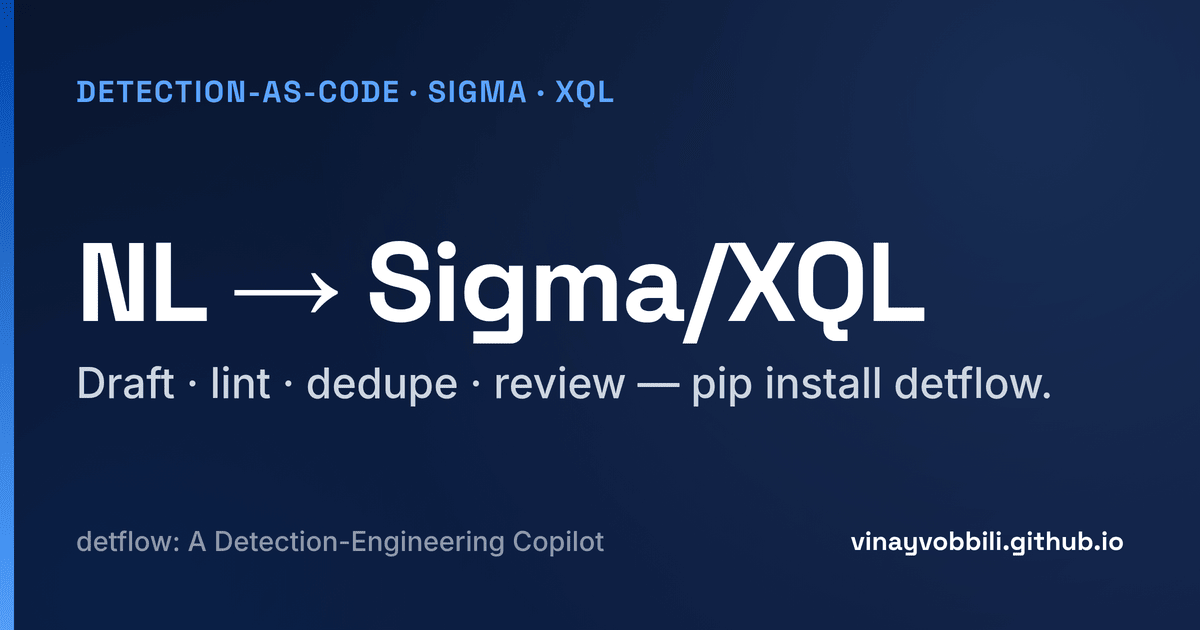
detflow — draft, lint, dedupe and review detections as Sigma or Cortex XQL

detflow: A Detection-Engineering Copilot You Can pip install

I kept rebuilding the same four things inside every detection-as-code pipeline — lint a rule, draft one from plain English, check it against what you already run, and review it like a senior engineer. So I extracted them into detflow, a vendor-neutral OSS Python package. Deterministic lint and overlap with no dependencies, model-agnostic drafting and review, and a never-raises contract so it degrades instead of breaking.

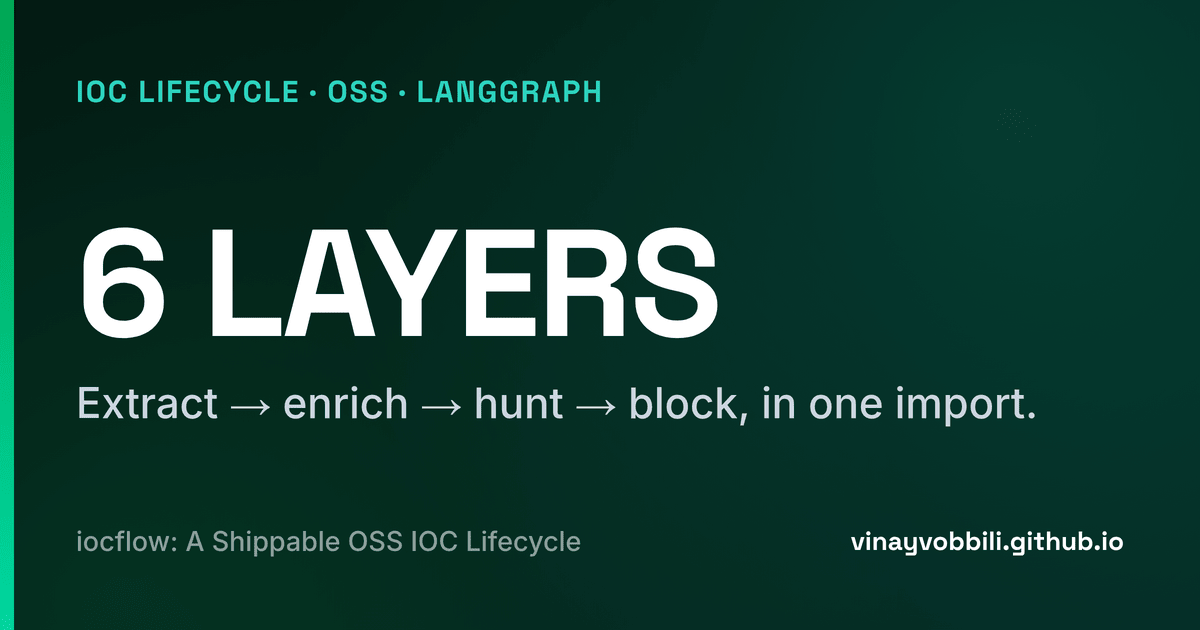
iocflow — the whole IOC lifecycle (extract, enrich, hunt, block) in six pip-installable layers

iocflow: Turning a Production AI SOC into a Shippable OSS Library

After building SOC-in-a-Box — a multi-agent AI SOC where one local LLM wears every hat behind a human-in-the-loop gate — I distilled the durable lesson into iocflow, an open-source Python package for the whole IOC lifecycle. Deterministic primitives (extract → enrich → comment → hunt → block) as tools, a LangGraph multi-agent team on top, and three-layer authority so the LLM never gets the final say on a destructive action.

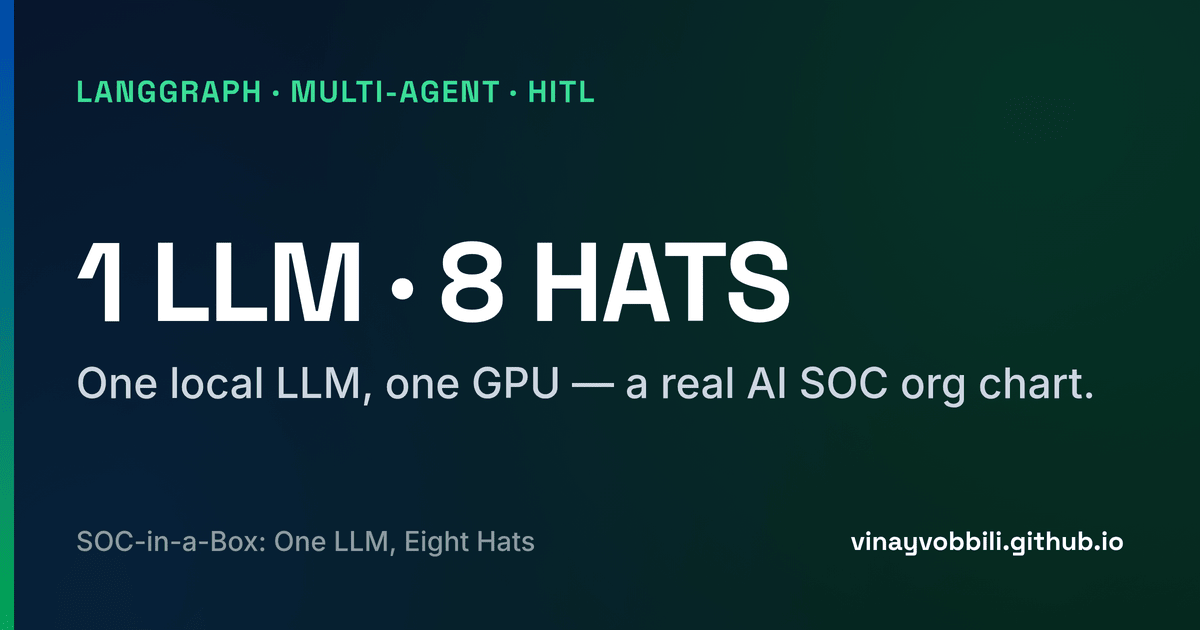
One local LLM playing eight analyst roles — a production-bar AI SOC on a single GPU

SOC-in-a-Box: One LLM, Eight Hats, A Production-Bar AI SOC on a Single GPU

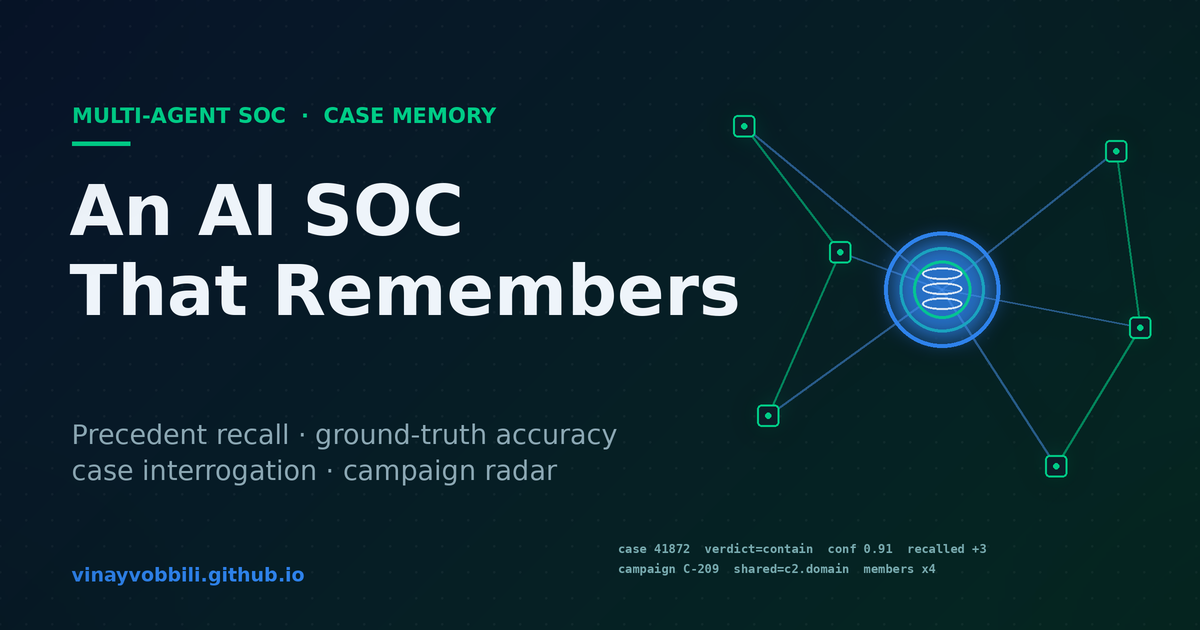
An AVP-sponsored multi-agent SOC where one local LLM plays Sentinel, Tier 2, IR Lead, Threat Intel, SOC Manager, Detection Engineer, and Threat Hunter — coordinated over a Redis Streams bus with a human-in-the-loop approval gate before any real-system action. The framework choices, the architectural trade-offs, and the backtest harness that lets us put real numbers on agent quality before going live.